About the School of Medicine
There are four, five, and six-year medical degree programs. Clinical contact with patients is introduced at an early stage, but in the initial years the emphasis is on the basic sciences (Human Biology, Anatomy, Physiology, Biochemistry, Pharmacology) and cognitive sciences (Psychology, Behavioral Sciences, Medical Informatics, Ethics, Health Promotion) which together provide a basis for understanding modern healthcare delivery.
In the latter years of the program, the emphasis is on the acquisition of knowledge and skills of immediate relevance to professional practice. Teaching in this phase includes Clinical Laboratory Sciences, Public Health, and the Principles and Practice of the major Clinical Disciplines. Through bedside teaching, one-on-one mentor-ship, the clinical skills laboratory, and small group tutorials, students are guided to learn the following skills: taking a patient history, conducting an examination, selecting appropriate investigations, interpreting findings and formulating plans of patient care. As they gain experience, they assume greater responsibility through rotations in affiliated hospitals and in community practices.
In addition to teaching and the provision of medical care, all departments are engaged in research, often as interdisciplinary collaboration between University and Hospital.
The four-year, Graduate Entry Medicine program is focused on rural medicine. Students interested in this particular program are strongly encouraged to notate any experience/interest relevant to rural medicine in their Personal Statement and Resume/CV. This program has yet to receive approval from the Irish Medical Council. If you are accepted to this program, you will be provided with further details of the accreditation process.
Take a look at the annual Teddy Bear Hospital event, where young patients learn about health in a fun and friendly way.
Entry Requirements
SIX-YEAR PROGRAM
- The course is designed for students entering directly from high school.
- The minimum requirements for students applying from High School:
- Canada: Minimum overall GPA of 85% in Grade 12 top six academic subjects, including minimum 85% in Grade 12 Chemistry, Biology, and Physics or Mathematics.
- USA: Minimum overall GPA of 3.5 including minimum B in Chemistry, Biology, and Physics or Mathematics.
- SAT/ACT requirement: Please note U.S. students applying to the University of Galway (who are resident in the United States of America in the year of application) and are applying directly from high school are required to submit either an ACT or SAT score. Applicants must present either a minimum ACT score of 28, or a minimum SAT score of 1300.
FIVE-YEAR PROGRAM
- Students entering directly from high school with AP Examinations.
- Must meet the basic entry requirements of the 6-year program listed above, AND AP examinations in Chemistry, Biology, and one of Physics, Mathematics, or Psychology with a minimum score of 5,5,4 in any combination
- Students entering directly from high school with IB Examinations.
- Applicants must present a minimum score of 36 IB Diploma points (exclusive of bonus points). The IB Diploma must comprise a minimum of six subjects* (three subjects at Higher Level and three subjects at Standard Level), which must include Chemistry at Higher Level (with a minimum score of 6) and another laboratory science subject (Biology or Physics) or Mathematics at Higher Level.
- If Mathematics is presented with Chemistry at Higher Level, another laboratory science subject (Biology or Physics) must also be presented at Standard Level.
- Applicants must present a minimum score of 36 IB Diploma points (exclusive of bonus points). The IB Diploma must comprise a minimum of six subjects* (three subjects at Higher Level and three subjects at Standard Level), which must include Chemistry at Higher Level (with a minimum score of 6) and another laboratory science subject (Biology or Physics) or Mathematics at Higher Level.
- Students who are currently enrolled in college/university but who will not have earned a bachelor’s degree by August of the year of entry*
- Applicants applying with a bachelor’s degree (MCAT not required).**
*Five and Six-year track: All IB Diploma subject examinations must be taken within two consecutive academic years (i.e. school years 11 and 12). Any repeat examinations taken outside of these two years will not be considered.
**Students who have completed one or more years of university OR who have received an undergraduate degree will be assessed on an individual basis but are expected to present courses in chemistry, biology and either physics or mathematics, with minimum GPA of 3.3 or equivalent.
FOUR-YEAR PROGRAM*
- Students are required to have completed their degree program prior to August of the year of entry and must also have taken the MCAT by January of the year of entry.
- A minimum undergraduate cGPA of 3.0 on a 4.0 scale and minimum MCAT of 503 or minimum GAMSAT of 60 are required. The MCAT/GAMSAT must have been written within 3 years. e.g. test dates no earlier than August 2024 for 2027 entry. Canadian students should refer to the OMSAS Conversion Table for equivalency.
- Online interviews will be conducted.
*Subject to Irish Medical Council Accreditation.
NOTE: The four-year, Graduate Entry Medicine program has an EXTREMELY limited number of places (5 or 6) and is designed for students with a demonstrated interest in rural medicine. Students interested in this particular program are strongly encouraged to notate any experience/interest relevant to rural medicine in their Personal Statement and Resume/CV.
North American Students Experience
International Electives
The School of Medicine has a strong international network and students have the opportunity to gain experience overseas as part of the electives programme. Students complete clinical electives before the final medical year. These can be undertaken in a hospital, clinic or research laboratory of the student’s choice at home or abroad.
The medical school organizes information sessions where students are provided guidance on how to arrange clinical electives and also receive advice on preparing for and taking USMLE and Canadian Board Examinations.
Click below to view a list of medical centres, hospitals and clinics where University of Galway students have pursued their clinical electives in North America in recent years. Note that it is not an exhaustive list, as students also undertake Summer Electives that are not tracked by the medical school.
Teaching Hospitals
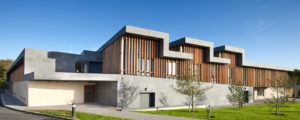
Merlin Park Hospital, National University Ireland, Galway
The main teaching hospital of the Medical School is University College Hospital Galway, a 500-bed referral and tertiary-level hospital. UCHG is located immediately adjacent to the main university campus, facilitating the integration of clinical and basic teaching.
Merlin Park Hospital, also located in Galway City, is the second designated teaching hospital. Eight additional affiliated hospitals throughout the region are linked to the Galway Medical School.
In all, these ten hospitals affiliated with the Medical School draw on a catchment area with a population of approximately one million people. The hospital departments encompass all of the important clinical and laboratory disciplines, including:
Medicine, Surgery, Obstetrics and Gynecology, Pediatrics, Psychiatry, Radiology, General Practice, the Sub-specialties, the Clinical Laboratory Departments and the Specialist Diagnostic Units.